From Symbolic to Iconic Signs

Leonardo da Vinci’s (1452-1519) drawing of the psychophysical question exemplifies a transition from symbolic to iconic signs, which generates new knowledge. In these drawings Leonardo tries to explain how mind and body function together. In 1487, in the Royal Library MSS 12626r and 12627r, he illustrated schematic cross sections of the head and mapped mental capacities, according to the tripartite model. Leonardo probably became familiar with the idea of connecting functional centers to cerebral ventricles through reading the work of Albertus Magnus (1206-1280), who mainly relied on the work of al-Ghazali (1053-1111). As we can see, in 12626r and 12627r, the sensus communis, in which all the senses converge, and the judgment and soul reside, is in the middle ventricle, unlike the tradition in which it’s in the anterior one.

Leonardo-12626r-detail                   Leonardo-12627r-detail

                        12626r, detail                                                                                12627r, detail

We know that Leonardo designated the middle ventricle to the sensus communis since in 12626r, “senso commune” is written on the left side of it, and in 12627r “chomune senso” in it.

In Royal Library MS 19057r from 1489 we see a different kind of representation, although the attempt to localize mental capacities continues. In the top paragraph of the page Leonardo writes: “Where the line a m, intersects the line c b, will be the confluence of all the senses; and where the line r n, intersects the line h f, will be the pole of the cranium, at a third of the base of the head, and thus c b, will be a half” (Saunders and O’Malley, p. 52).

Leonardo-19057r-detail

                                     19057r, detail

Here, unlike in 12626r and 12627r, Leonardo doesn’t specify the mental capacities next to or in the cerebral ventricles. Instead, his method is to direct the viewers’ gaze from the text to the image and vice versa. The skull that he draws from an observation of a real one, defines the space for the discussion. The single letters that he writes in the paragraph and at the ends of the lines (a, m, c, b, r, n, h, f) enable him to point to a specific line. The lines, which he probably drew after and over the image of the skull, help him to direct our look to a specific point by intersections within the image. This point is the “confluence of all the senses”, the sensus communis.

The transition from words as the main signifier of the location of the sensus communis to a very specific point in a drawing that imitates a real skull is a linguistic move from symbols to iconic signs within the same scientific question. This move not only enabled Leonardo to get closer to a point in space, but also to communicate his findings in a way that makes much more sense.


Left image: Leonardo da Vinci, The Musculature of the Leg and the Anatomy of the Head and Neck, 1487. Pen and brown ink on paper, 222 x 290 mm. Windsor, Royal Library, no. 12626r
Right image: Leonardo da Vinci, Miscellaneous Anatomical Drawings, 1487. Pen and brown ink on paper, 203 x 152 mm. Windsor, Royal Library, no. 12627r
Bottom image: Leonardo da Vinci, Two Views of the Skull,  1489. Pen and brown ink on paper, 188 x 134 mm. Windsor, Royal Library, no. 19057r
 

Kemp, Martin. “‘Il Concetto dell’Anima’ in Leonardo’s Early Skull Studies.” Journal of the Warburg and Courtauld Institute 34 (1971): 115-134
O’Malley, Charles D. and J.B de C.M. Saunders. Leonardo da Vinci on the Human Body. 1952. Reprint, New York: Gramercy Books, 2003
McMurrich, J. Playfair. Leonardo da Vinci: The Anatomist. Baltimore: Williams & Wilkins, 1930
Richter, Irma A. The Notebooks of Leonardo da Vinci. Oxford: Oxford University Press, 1952
Richter, Jean Paul. The Notebooks of Leonardo da Vinci, vol. 1. New York: Dover, 1970
Roberts, Jane, and Kenneth D. Keele, eds. Leonardo da Vinci: Anatomical Drawings from the Royal Library Windsor Castle. New York: The Metropolitan Museum of Art, 1984

Place in Image Captions III

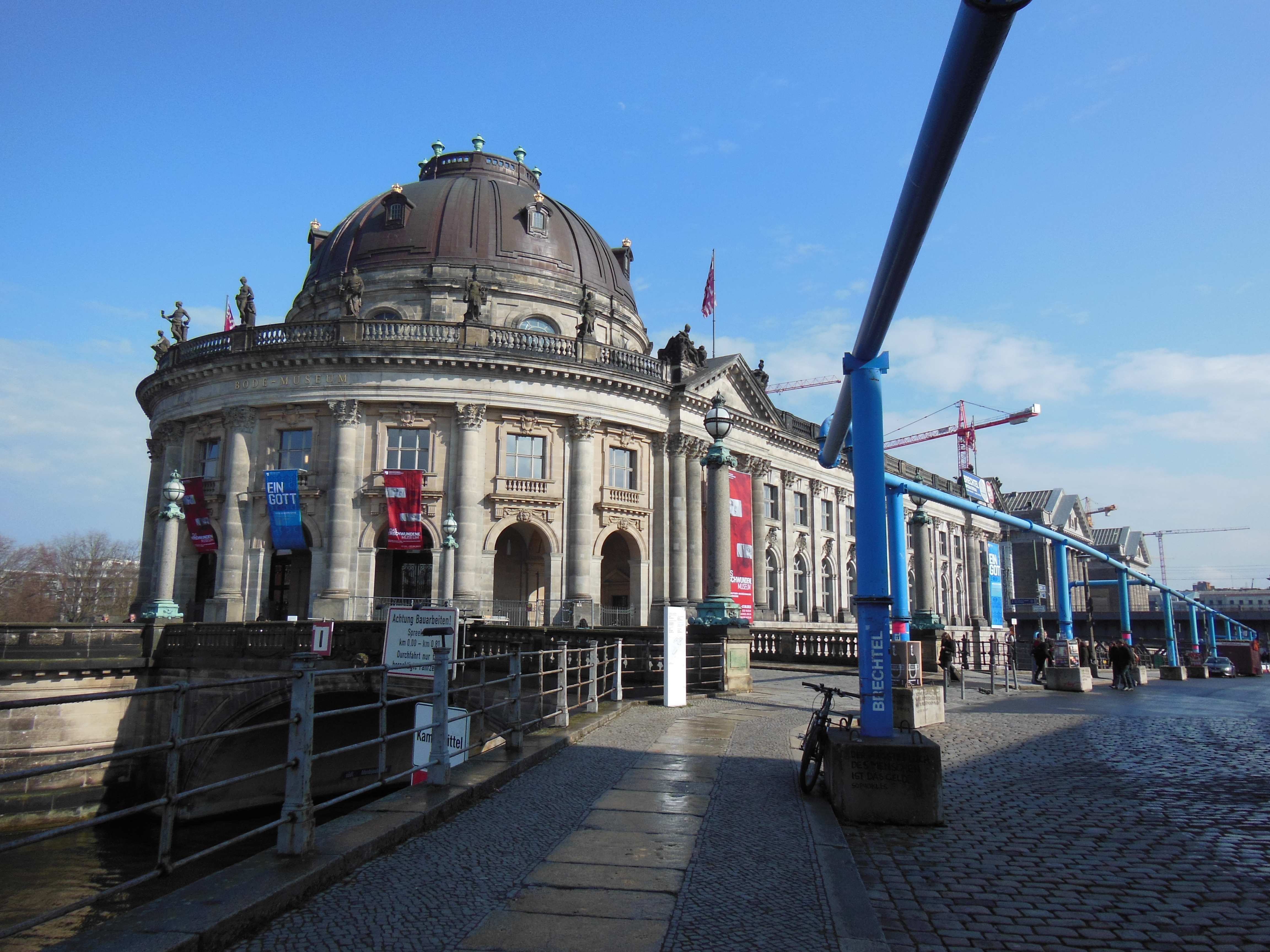
But… ethically, if we think about the caption more as part of the book than as an element that accompanies the artwork, the historian has a say. For example, the caption of Fig. 181 in Burckhardt’s Civilization raises interesting questions about the responsibility of the historian, editor and publisher for updating locations of artworks that have changed since the book was written, and since its first publication. The caption of Fig. 181, Portrait of a Young Woman by Bastiano Mainardi (1460-1513), indicates that the painting is in Kaiser Friedrich Museum in Berlin. However, in 1956 the museum was renamed after its founder and first director Wilhelm von Bode (1845-1929). Though the 1958 edition was published after the museum was renamed, it still uses its previous name. Should creators of new editions ensure the accuracy of the information conveyed in captions? If yes, it means that each edition entails historical research. If no, the captions themselves become part of history, featuring some kind of “authenticity,” even if it confuses the readers.

N. Yaari - Bode Museume - 2015             Bastiano - Portrait of a Woman

What is the ethical status of image captions in books? Do they belong to anyone, and are they under someone’s responsibility? Are the ethical questions about them also questions about art and its identification as commodity that is always associated with fixed body and time? And, lastly, when we talk about “body,” can we refer to the universal “body of art” and universal “body of books” at the same time, and expect that when one of them changes the other, because both belong to a single material world, changes as well?


Burckhardt, Jacob. The Civilization of the Renaissance in Italy. New York: Harper & Row, 1958
Left image: Noa Yaari, Bode Museum, 2015
Right image:  Bastiano Mainardi, A Portrait of a Woman, 15th Century, Tempera on wood, 44 x 33 cm. Bode Museum, Berlin (source: https://commons.wikimedia.org/wiki/File:Sebastiano_mainardi_04.jpg)
 Bode Museum: http://www.smb.museum/en/museums-institutions/bode-museum/about-us/profile.html


Place in Image Captions II

In my last post, I suggested to indicate in captions “any location that contributes to the meaning of the work” when the artwork has no body. Upon reflection I realize that it’s problematic and, unfortunately, I have to disagree. Artworks do not begin and end with a place in which their materiality and physicality settle. There are numerous activities around and within the work that literally take place, beyond the collection or the city in which the work dwells at the time of writing about it. To look at artworks as objects whose evolution culminates in a specific form and location is to dismiss their never-ending transformation. It reflects a capitalistic approach to art and culture; appreciation of human endeavors through their capacity to sell and be sold. Furthermore, this idea resonates with Aristotelian cosmology, according to which each one of the elements – earth, water, air and fire – aspires to its ‘natural place’; a concept that we don’t work with anymore… And finally, it attests to my confusion between the artist’s and the historian’s role, when I position the latter in an inappropriate status in relation to the former, who has the right to determine whether their works, both the process and the end-product, occupie a spatial spot.

Fork-dance       Shelley-2014


Left image: Charlie Chaplin, The Gold Rush, 1942, Hollywood (source: http://nearclowne.uk/wordpress/wp-content/uploads/2014/11/potatoe-dance.jpg)
Right image: Noa Yaari, Shelley, 2014, Toronto

Place in Image Captions I

Informing readers about the location of the artwork in the caption emphasizes the artworks’ physicality; its existence beyond the printed image somewhere in the world. From the readers’ point of view, identifying a name of a place in proximity to the image and the date of production is perceiving the visual evidence as part of a cultural momentum, whether the artwork was produced in the place it is preserved or not. This lingering cultural momentum is the time during which the artwork has survived, from its creation to the moment in which the author writes about it. The body of the artwork that is always located at a certain place connects the artist, their audience and the historian. It is the medium from which historical knowledge about a time span can be extracted. In addition, noting the location of the artwork implicitly invites readers to visit both the artwork and its place, and consequently it encourages further development of a discourse that uses visual evidence.

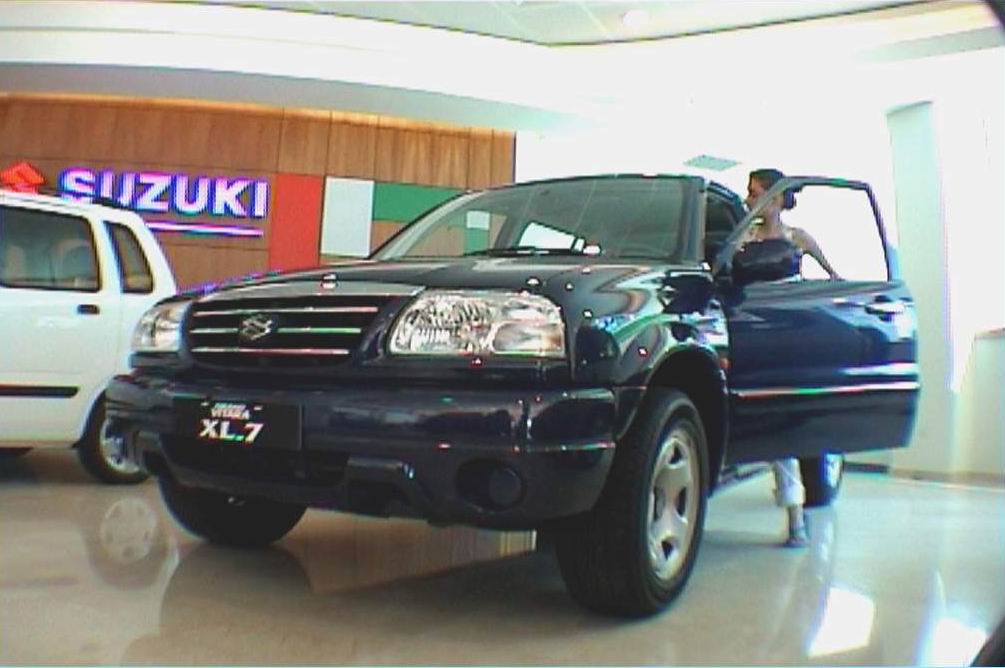
Noa Yaari - Sel-portrait with SUZUKI

Noa Yaari, Self-portrait getting into a SUZUKI GRAND VITARA XL.7, 2002, Tel Aviv

But what happens when the artwork cannot survive, in the narrow sense of the word, since it has no body; when it is a digital code without a specific physical format? What place, if at all, could describe the work at the time of writing about it? In this case, I’d consider indicating any location that contributes to the meaning of the work.

Élisabeth Louise Vigée Le Brun

A monographic exhibition of the French painter Élisabeth Louise Vigée Le Brun (1755-1842) has been traveling through Europe and North America. It started at Grand Palais in Paris, it’s currently on display at the Met Museum in NY (until May 15), and will end in the National Gallery of Canada, Ottawa (Jun 10 – Sept 11).

Le Brun’s Self-portrait Painting Queen Marie Antoinette (1790), raises interesting questions about the self and the medium of painting. Imagine that there is a pair of eyes fixed in space and their gaze is directed at Le Brun’s eyes. The gaze is always there, but the identities that can use it are changeable. If you want you can be Le Brun, looking back at yourself from a mirror, working on your self-portrait. You can also be the queen, looking at Le Brun looking at you, working on your portrait. But not less than that you can be yourself, looking at Le Brun looking at you, suggesting that it’s not the gaze that is shifting, but the selves that borrow it for a moment.

Le Brun - Self-portrait - 1790          

                            Self-portrait, 1790                                                                         Self-portrait, 1791

And to complicate it further… a year later, the 4th Earl of Bristol Frederick Augustus Hervey (1730-1803) commissioned Le Brun to make a copy of the aforementioned painting, but this time with the portrait of her daughter Julie on the canvas, instead of the queen’s. Taking into consideration that Marie Antoinette was guillotined on Oct 16, 1793, could it be an artistic prophecy? Or was it Hervey flattering Le Brun, implying that her daughter is “the real queen” or “princess”?


Left image: Élisabeth Louise Vigée Le Brun, Self-portrait Painting Queen Marie Antoinette, 1790, Oil on canvas, 100 x 81 cm. Uffizi Gallery, Florence (source: http://www.batguano.com/vlbflor2.jpg)
Right image: Élisabeth Louise Vigée Le Brun, Self-portrait, 1791, Oil on canvas, 99 x 81 cm. Ickworth, Suffolk, England (source: https://commons.wikimedia.org/wiki/File:Lebrun,_Self-portrait.jpg)

Oral History

Noa Yaari - Oral History

Noa Yaari, Oral History, 2016

Crossing Disciplines is Studying What Is

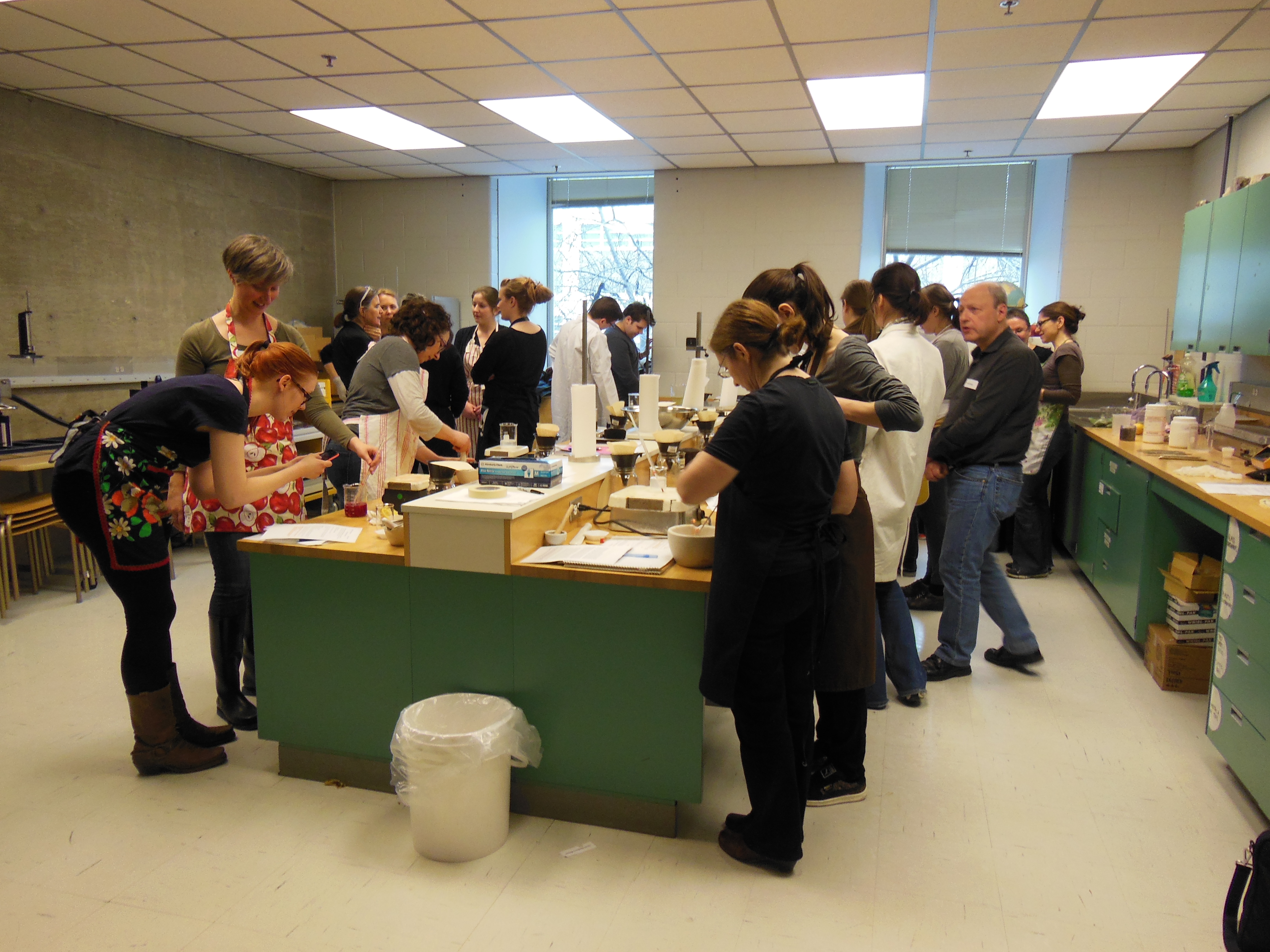
Between March 14-16, the Centre for Reformation and Renaissance Studies hosted its Distinguished Visiting Scholar Prof. Pamela H. Smith (Columbia University). During her visit Prof. Smith gave two talks: “Historians in the Laboratory: Art and Science in Early Modern Europe” and “Transforming Matter and Making Art in a Sixteenth-Century Workshop,” as well as two lab-workshops in which we reconstructed sixteenth-century techniques of creating lake pigments with natural colorants. All four events, reflecting the spirit of the Making and Knowing Project, were fascinating, enriching and superbly organized. Contemplating these events, I find that they all conceptually relate to three main axes that might seem contradictory, but are not necessarily so:

  • Synthesis and analysis
  • Body and intellect
  • Past and future

Workshop

Reconstructing Sixteenth-Century Workshop Techniques, Earth Sciences Lab, University of Toronto

Synthesis and analysis: we tend to assume that the process involved in making things is like a two-way road; that each point in the process can be reached from its beginning or its end. Therefore, no matter where we are coming from, if we will adequately experience the whole process, we will arrive at the same points. This assumption is the basis of studying how things become what they are, whether they are abstract or concrete, complicated or simple. But, paradoxically, each point within a process is an open space, a location in which anything can happen, and the only fixed element in relation to the process is our own idea how its beginning and end appear. We think about a process as “successful” when it matches our expectations, or when it exceeds them by performing some quality that we appreciate. We judge it as a “failure” when the opposite happens, when reality doesn’t fit our conceptions of it, or even worse. Synthesis and analysis are not two opposite movements that run towards or from each other. They are two arbitrary definitions of where we locate ourselves and our mental pictures in relation to what is.

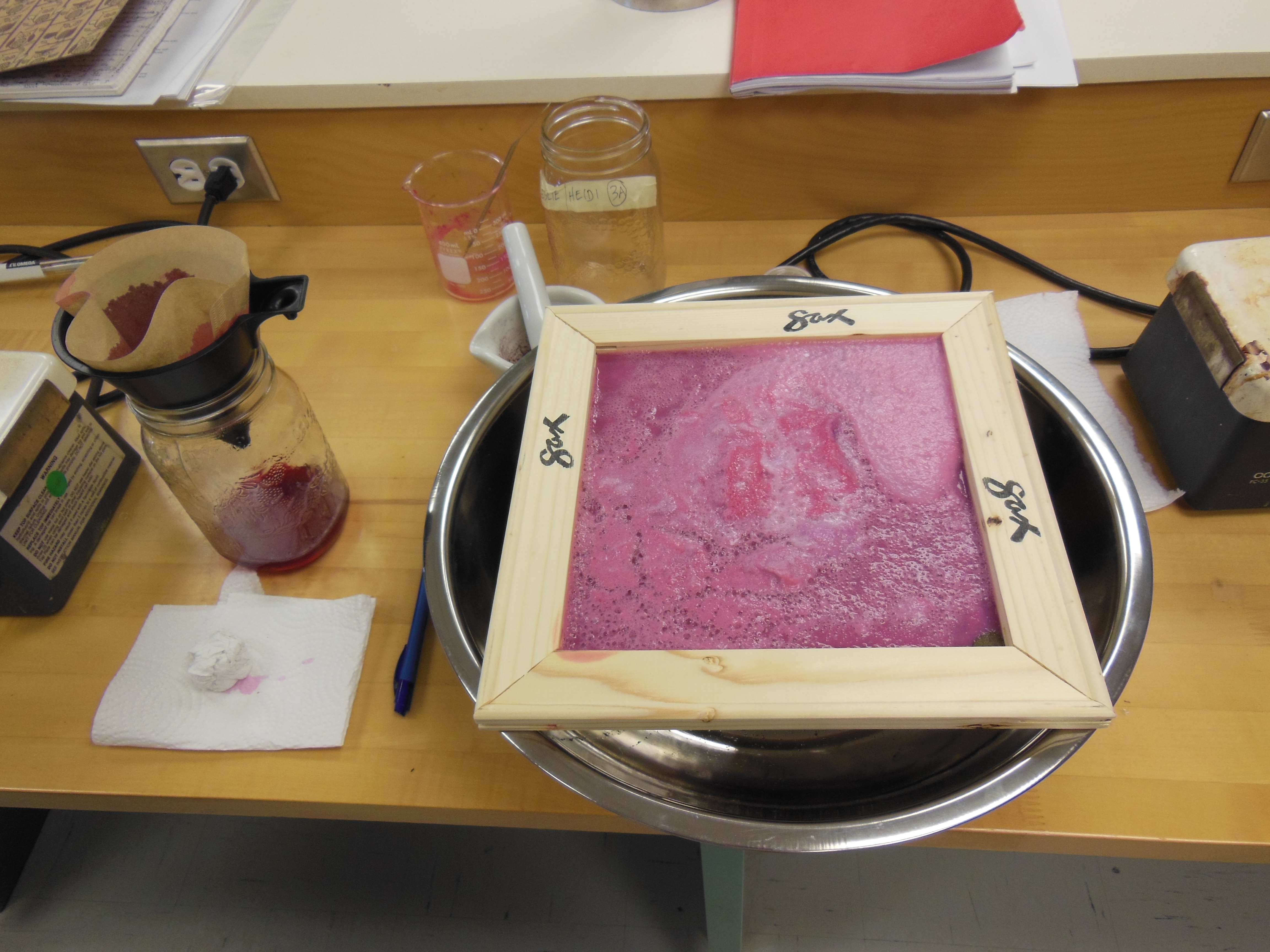
Red lake I          Red lake II

Making red lake in the workshop I                                               Making red lake in the workshop II

Body and intellect: many of us have internalized the notion that body and intellect contradict each other; that both entities can exist and indeed thrive independently, and, moreover, that one of them is always dominant over the other; that at any given moment there is some kind of hierarchy between them. There are things we do for our body and things we do for our intellect, and when we do those things we use “body” and “intellect” to categorize and explain our activities to ourselves and others. As with the conceptualization of “synthesis” and “analysis,” this notion is fundamental to how we perceive learning processes, and not less than that, education and practical teaching. But this notion is merely a convention, a framework by which one can portray reality that actually hasn’t heard about these two categories, let alone, about the differences between them. From reality’s point of view, body and intellect are the very same situation; a single instrument that makes things happen, processes occur, causes tasks to be achieved, etc. There is no boundary delineating between our physical and rational experiences, and the best place to see this borderless phenomenon is nature. In the natural realm, materials and living creatures behave “rationally” without having “intellect”. They know what to do next because their body tells them where they are about to find their relatively perfect future.

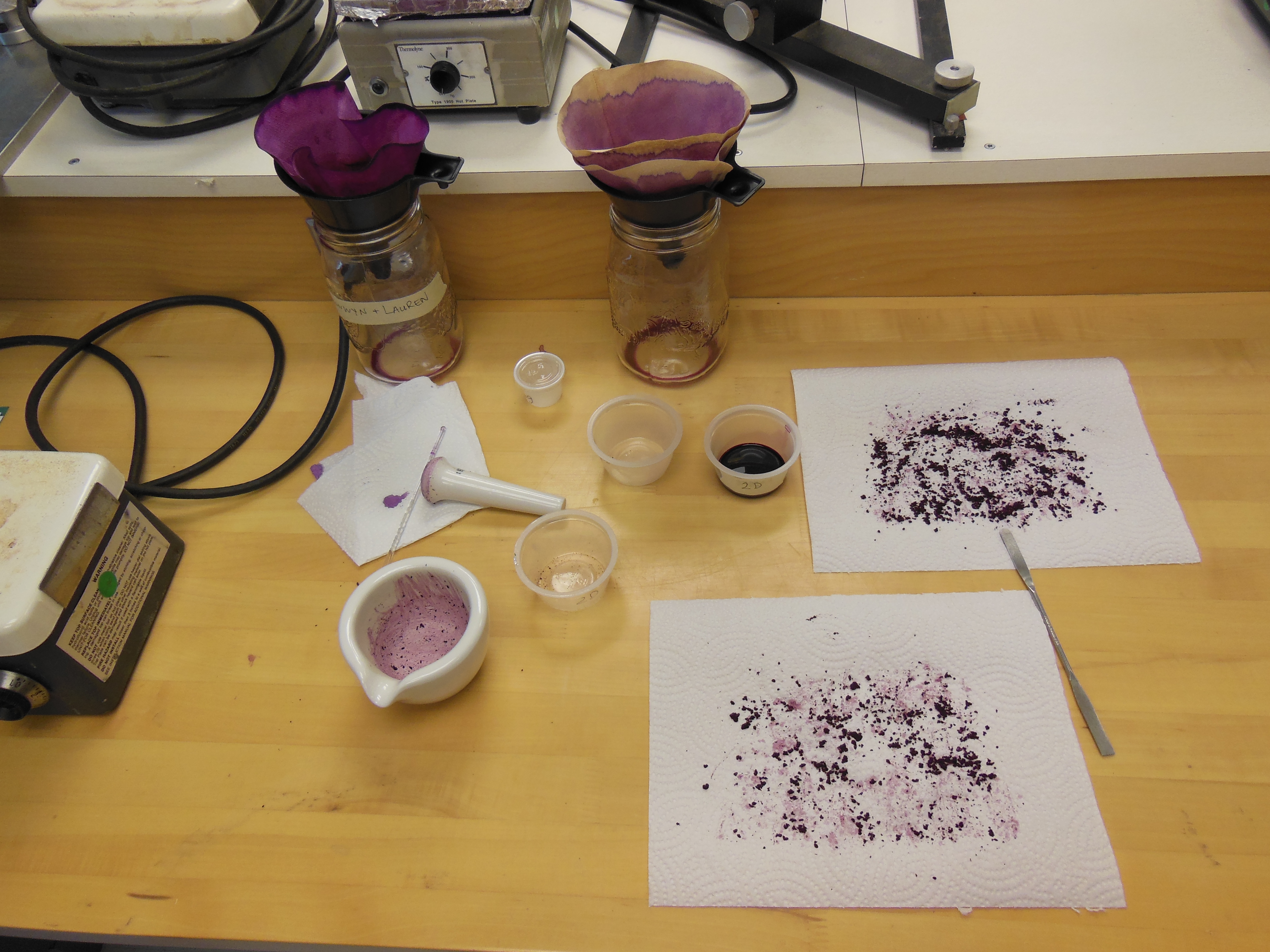
Red lake III

Making red lake in the workshop III

Past and future: crossing disciplines is studying what is. In most cases, the academic system requires people to choose between disciplines, departments, and fields. Everyone has their specialization and usually this functions as an adjective that describes a scholar. In order to identify yourself you throw a name of a field into the air, and in order to survive you pay much heed to the echo that comes back to you. But reality (our star tonight) is so very different; it doesn’t hold back when chemistry gets too close to physics, history to painting, and culinary to chemistry. If we were to embrace a norm of crossing disciplines as a way of developing academic maturity, we would have to adjust our perception of nature and time. This is probably one of the challenges the system faces when it comes to maintaining fluidity. Unlike in our culture, in nature there’s plenty of time; it doesn’t rush anywhere, because any adjective that might describe it has been already echoed by nature itself. Ideally, we could imitate nature in the way we study, in addition to how we create tangible objects; to work as if we have all the time in the world; when past, present and future are there only to remind us to revere the flow.

Untitled

Noa Yaari, Untitled, 2013